
Burst Testing
Burst Testing Equipment for Seal Strength & Package Integrity
Burst testing is a fast, quantitative method for verifying how much internal pressure a package or seal can withstand before it fails. For manufacturers of flexible and semi-rigid packaging, a reliable burst tester turns seal quality from a subjective judgement into a defensible, audit-ready measurement — ideal for rapid machine set-up, in-process checks and quality release.
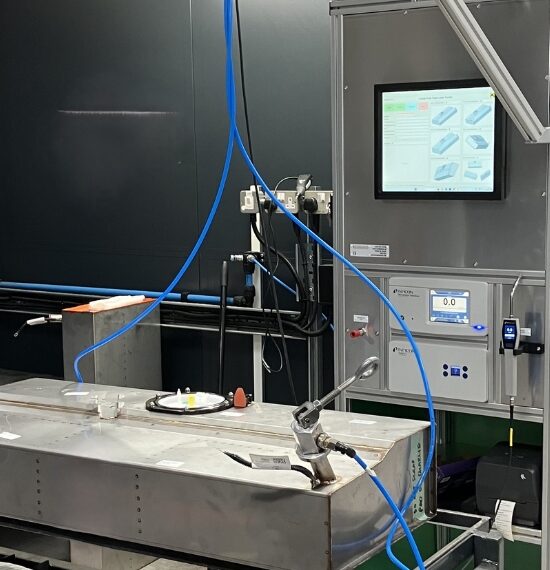
Optimeasure supplies burst testing equipment built around the UK-made Optiburst — a simple, rapid “go” / “no go” gauge that lets operators pull samples straight from the line and verify seal strength in seconds. See full specifications on the Optiburst product page.
How Burst Testing Works
A burst tester introduces air into a sealed package until the material or seal ruptures, capturing the exact peak pressure at failure. The Optiburst uses a single or twin needle technique: a high-tack foam sealing spot is applied to the pack and the needle is driven through its centre, forming a hermetic seal so air pressurises the package internally without a false leak path.
Three test modes cover the full picture of package strength:
- Burst — inflates to rupture, capturing peak failure pressure (the classic go/no-go test).
- Creep — holds a set pressure over time to check seals withstand sustained load (e.g. warehouse stacking).
- Creep to failure — holds pressure until rupture, measuring time-to-failure for validating new or thinner laminates.
Burst Testing Standards
▶ Burst and seal-strength standards supported
| Standard | What it covers |
|---|---|
| ASTM F1140 | Unrestrained (open-air) internal pressurisation failure resistance — finds the weakest point of the package |
| ASTM F2054 | Restrained burst testing of flexible package seals between rigid plates — isolates true seal-bond strength |
| ASTM F2095 | Pressure decay leak testing of flexible packages (with or without restraining plates) |
| ASTM F2096 | Detecting gross leaks in packaging by internal pressurisation (bubble test) |
| ASTM F88 | Seal strength (peel) testing — complements burst data in a full validation protocol |
When to Use a Burst Tester
Burst testing is the right choice when you need a fast, quantitative measure of seal and package strength rather than micro-leak detection. It excels at:
- Machine set-up — quickly establish safe sealing pressure and temperature after a line changeover.
- In-process quality control — operator-friendly go/no-go checks beside the production line.
- Validation & R&D — empirical seal-strength data for qualifying new films, laminates and pack formats.
For micro-leak and sterile-barrier verification on medical packaging, burst testing is typically paired with leak methods — see our packaging integrity testing page.
Burst Testing Applications
The Optiburst handles medical, food and industrial flexible packaging — sterile pouches and Tyvek® trays, MAP snack packs, lidded trays, coffee pods and industrial liquid pouches. For the full medical and pharmaceutical compliance picture (ISO 11607, USP <1207>), see packaging integrity testing.
Frequently Asked Questions
Complex Testing Requirements?

