
Packaging Integrity Testing
Packaging Integrity Testing for Medical & Sterile Packaging
In medical device and pharmaceutical manufacturing, packaging integrity testing is non-negotiable. With terminally sterilized products, a failed seal isn’t just a bad batch — it is a direct threat to patient safety and regulatory compliance. Proving that your sterile barrier holds requires a technically defensible, quantitative quality-control cycle.
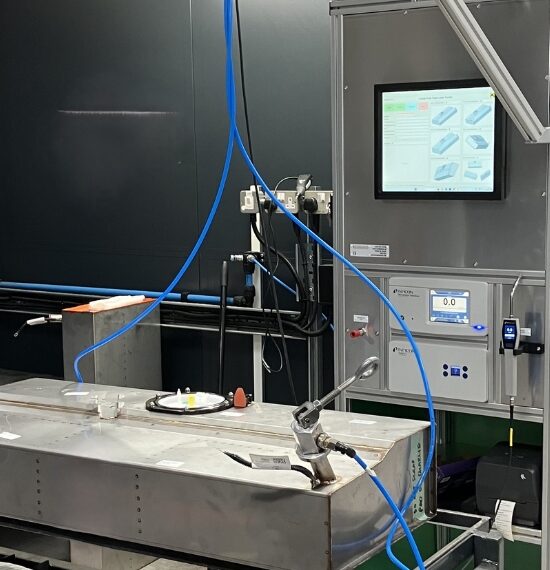
Optimeasure supports packaging integrity programmes with the UK-made Optiburst platform, which brings an economic, distributed burst and seal-strength testing capability directly to the cleanroom or production floor. Operators can pull products straight from the line and verify structural and seal strength within seconds. Full specifications are on the Optiburst product page.
Regulatory Compliance & Standards
Meeting the expectations of auditing bodies means aligning with global consensus standards:
- ISO 11607 (Parts 1 & 2) — mandates a validated process-control system for terminally sterilized medical device packaging. Burst testing (ASTM F1140, ASTM F88) proves seals withstand the internal pressure fluctuations of Gamma or Ethylene Oxide (ETO) sterilization cycles.
- USP <1207> — emphasises quantitative, deterministic package integrity testing. Where vacuum decay handles non-destructive micro-leak testing, burst testing is the foundational stress test that maps a package’s physical limits before container closure integrity testing (CCIT).
Burst & Seal-Strength Methods
▶ ASTM F1140 vs ASTM F2054 — how they differ
| Method | Objective | Why it matters |
|---|---|---|
| ASTM F1140 — Unrestrained | Open-air “stress test” that inflates the pouch until it ruptures | Identifies the absolute weakest point; defines the maximum safe pressure for downstream leak/decay tests |
| ASTM F2054 — Restrained | Package locked between rigid plates during pressurisation | Limits material stretch so pressure acts on the seal line — a highly repeatable measure of true seal-bond strength |
Typical Medical & Pharmaceutical Applications
▶ View medical & pharmaceutical applications
| Category | Applications tested |
|---|---|
| Flexible medical products | Catheters & medical tubing (lumen and bonded-joint pressure thresholds); IV & drainage bags (fluid-retention boundaries) |
| Sterile medical packaging | Sterile pouches & Tyvek® trays (perimeter seal validation); foil packs & high-risk implant laminates (barrier seal strength) |
Engineered for Validated Environments
- Three test modes — Burst (peak blowout), Creep (sustained pressure) and Creep to Failure for operational qualification (OQ) data.
- Audit-ready accuracy — direct-acting solenoid valves and pressure sensing with <1 mbar accuracy and <0.5% of span linearity.
- Hermetic needle seal — foam sealing spots ensure all pressure data reflects the actual status of the package.
Looking for the burst method and equipment overview? See burst testing, or view the Optiburst product page.
Frequently Asked Questions
Complex Testing Requirements?

